
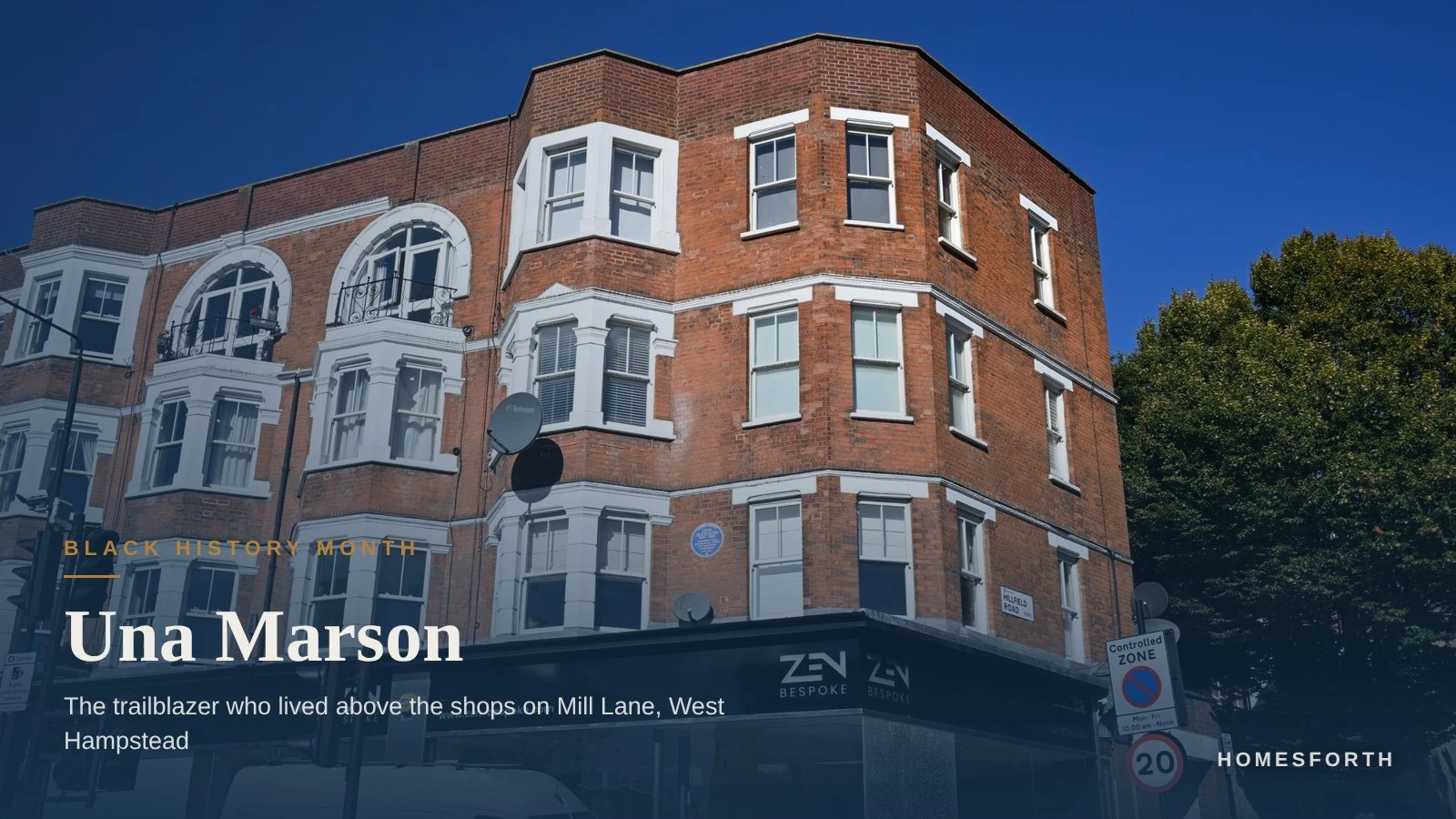
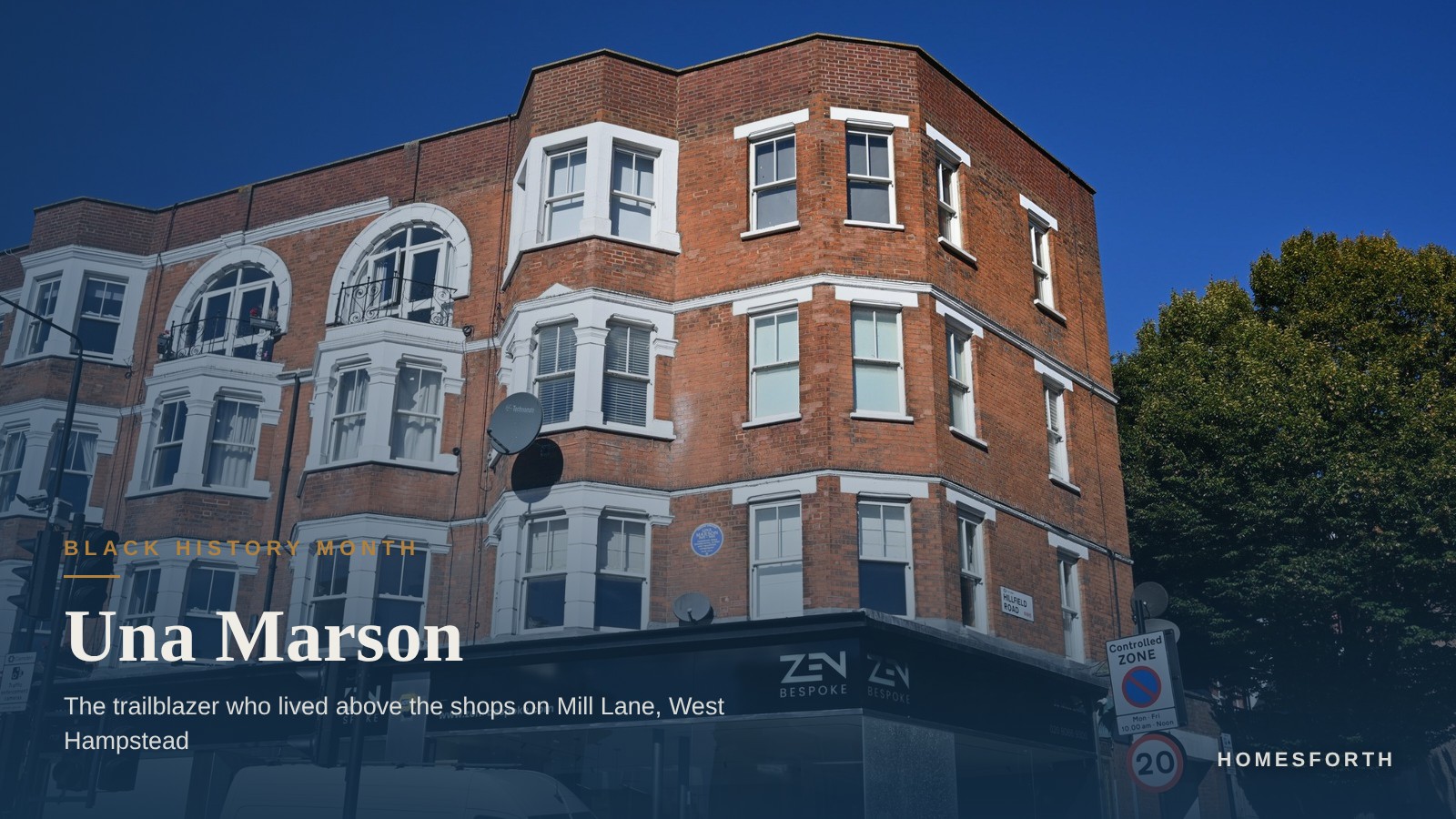
On the corner of Mill Lane, above the shops, a blue plaque went up in 2025 for a woman many Londoners have never heard of. Una Marson was a poet, a playwright, a feminist and the first Black producer at the BBC, and for a few remarkable years she called this corner of West Hampstead home.
A plaque above the shops
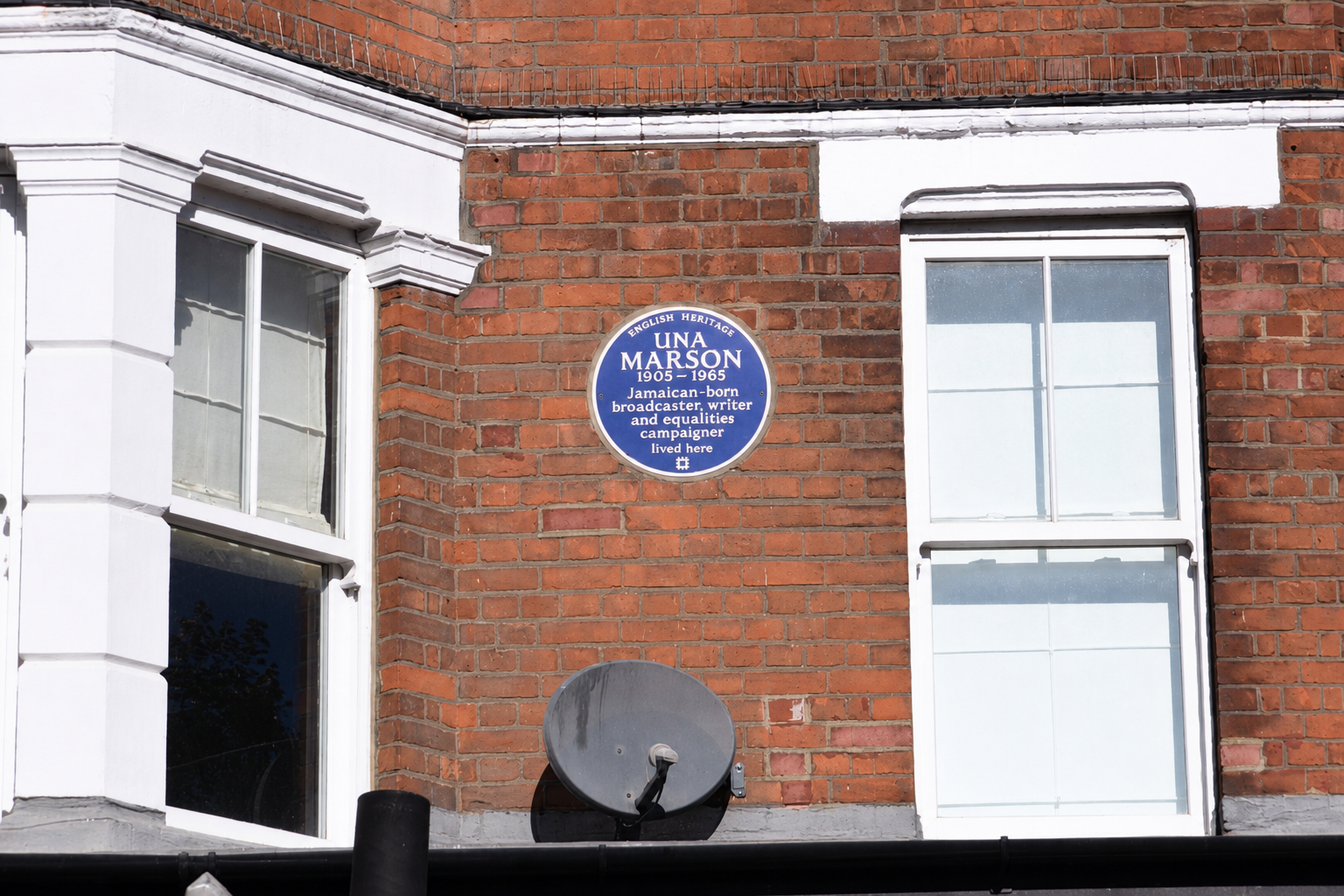
English Heritage unveiled the plaque in 2025 on The Mansions, the red brick block at 33 Mill Lane built around 1902 with shops below and flats above. It reads simply: Una Marson, 1905 to 1965, Jamaican born broadcaster, writer and equalities campaigner, lived here. The flat in question was number 14, which Marson shared with her sister Ethel and two others during the very years she was breaking new ground at the BBC. Today a bespoke furniture showroom sits beneath it, and most people walk past without looking up.
Who was Una Marson?
Born in rural Jamaica in 1905, Marson arrived in Britain in 1932 and quickly made herself impossible to ignore. She was a published poet in her twenties, a playwright whose work reached the West End, a magazine editor, and a campaigner for women's rights and racial equality at a time when a Black woman doing any one of those things was rare, let alone all of them at once. Her biographer has described her as the first Black British feminist to speak out against racism and sexism in Britain.
A new voice on the airwaves
Marson joined the BBC during the Second World War, and in 1942 she became its first Black producer. Her lasting achievement was a radio programme called Caribbean Voices, which she instigated in 1943. It gave Caribbean writers a platform on British airwaves for the first time, and across a run that lasted until 1958 it helped introduce some of the most significant names in Caribbean literature to a wider audience. For writers across the region, a reading on Caribbean Voices was the moment their work was taken seriously.
How could we have let someone of Una Marson's calibre just disappear?
Delia Jarrett-Macauley, biographerA campaigner to her core
Marson's activism ran alongside her writing throughout her life. Back in Jamaica in 1928 she had founded The Cosmopolitan, a magazine that covered social issues from a feminist angle. In 1935 she became the first delegate from Jamaica to address the International Alliance of Women. In London she worked as assistant secretary of the League of Coloured Peoples, Britain's first significant Black led campaigning organisation, and edited its journal, The Keys. She used every platform available to her, and where a platform did not exist, she built one.
Life on Mill Lane
What makes the West Hampstead connection so human is the picture English Heritage paints of her life there. The flat above the shops was a gathering place. Marson was known for getting out of bed at midnight to feed West Indian service friends who dropped in, and for hosting parties and music in the large flat. For people far from home during the war, her corner of NW6 was a piece of the Caribbean in north west London.
Why we wanted to tell this story
Blue plaques are easy to walk past. This one, only up since 2025, marks a life that helped shape British broadcasting and Caribbean literature from a flat above a West Hampstead shopfront. Stories like this are part of what makes these streets worth knowing, and part of why we love working here. This Black History Month, next time you are on Mill Lane, look up.
Stories from our streets
We work West Hampstead, Kilburn and Kensal Rise as one connected patch, and we think the history of a place is part of what makes it home. Read our full guide to the area.
Explore West Hampstead
Written by Homesforth
Source Jayden


